Our recent pleas to have the FBI testify at the inquest in Kenya are starting to pay off. This is the most recent article regarding the inquest:
Kenya: Ministers Named in Kaiser Inquiry
The Nation (Nairobi)
December 5, 2006
Posted to the web December 5, 2006
Francis Thoya
Nairobi
Names of two Cabinet ministers and an MP yesterday featured prominently in the ongoing inquest into the death of Mill Hill missionary John Anthony Kaiser.
Education minister George Saitoti and his Immigration colleague Gedion Konchella and Narok North MP William ole Ntimama are alleged to have offered financial support to a women's group in Trans Mara to demonstrate in Nairobi against former minister Julius Sunkuli accused of abusing schoolgirls in his constituency.
Sexual abuse
As the women were staging the demonstration, Fr Kaiser is claimed to have been investigating Mr Sunkuli over allegations of sexual abuse.
The three politicians are said to have supported the group after the Government failed to take action on Mr Sunkuli.
An inquest presided over by senior principal magistrate Maureen Odero yesterday heard that the priest died before he concluded his investigations.
His remains were discovered at the Morindet junction in Naivasha on August 23, 2000.
Catholic Women Association secretary Anne Kiruti told the court that in August 2000, women in Trans Mara angered by Mr Sunkuli's act, resolved to hold a demonstration against Mr Sunkuli over the claims.
"Since President Moi, among other key institutions, had failed to act on a petition presented to him regarding his minister (Mr Sunkuli), we resolved to hold a demonstration in Nairobi," Mrs Kiruti said.
And because they lacked money with which to organise the protest, the said they sought financial assistance from Prof Saitoti, Mr Konchella and Mr Ntimama. They were then Mr Sunkuli's political rivals.
Sixty women took part in the city demonstrations that started at the Federation of Women Lawyers offices and ended at the Holy Family Basilica.
Mrs Kiruti recounted that they travelled to the city in three matatus on August 15, 2000 at 2am, after they received information that the bus they were set to use, would be burnt.
Moved to Narok
She further told the inquiry that before meeting his death, Fr Kaiser had informed her that he had received complaints of molestation from 16 schoolgirls in Trans Mara.
"I recall Fr Kaiser agreed to support us after we informed him that we had received two complaints of sexual abuse against Mr Sunkuli," the witness said.
Yesterday, Mrs Kiruti claimed she moved from Kilgoris to Narok for fear of her life after Mr Sunkuli threatened her.
Mr Sunkuli turned up before the inquest following summons but he was stood down to allow Mrs Kiruti testify.
The court was yesterday informed that the Federal Bureau of Investigation (FBI) officers will take the witness stand next year to shed light on the circumstances cleading to the the priest's death.
Wednesday, December 27, 2006


Monday, December 04, 2006
Urgent appeal to FBI
URGENT APPEAL TO THE FEDERAL BUREAU OF INVESTIGATION (FBI) IN THE UNITED STATES OF AMERICA
from
THE GENERAL SUPERIOR AND THE GENERAL COUNCIL OF THE MILL HILL MISSIONARIES (MHM)
December 1, 2006
Since August 2003, a Public Inquest has been taking place in a Nairobi Court into the violent death of the American-born Fr. John Anthony Kaiser MHM. Father Kaiser was a tireless worker for peace and justice who had spent 35 years in Kenya. On 24th August 2000, his body was found in the Naivasha area, about 40 miles west of Nairobi. On October 24th, 2000, the United States Congress adopted Resolution 146, requesting “independent and thorough investigations” into the death of this great and courageous Mill Hill Missionary. On the 26th August 2000, FBI teams became involved in the investigations, resulting in the 80 page Final Report, dated 19th April 2001, from the FBI Washington Field Office. After the release of the FBI Report, the late Senator Wellstone from Minnesota, together with the Kaiser family, the Kenyan Episcopal Conference, the Mill Hill Missionaries and the Kenyan people demanded a Public Inquest into the death of the late priest. We are aware that the FBI has been requested by the Kenyan Government to testify, but so far without result.
As the General Council of the Mill Hill Missionaries, we want justice to be seen to be done, and the whole truth of Father Kaiser’s death to be told. On behalf of all the Mill Hill Missionaries in the world, we therefore fully support the recent public appeal of the family members of Father Kaiser, urging the Federal Bureau of Investigation to return immediately the remaining exhibits, and to ensure as soon as possible that all the FBI officers who investigated the late Father Kaiser’s death and Dr. Di Maio, the Chief Medical Examiner of Bexar County (San Antonio, Texas), come to testify in the Inquest currently being held in a Nairobi Court before the Senior Principal Magistrate, Mrs. Maureen Odero.
We deeply regret the fact that the FBI at this stage is still retaining exhibits, thus depriving the Court of crucial evidence. Witnesses have testified that they gave statements and exhibits to FBI Agents, but some of these statements and exhibits are not in the official file given to the Counsels as the Police Inquiry File. Under the Kenyan Evidence Act, documents cannot be introduced in court, unless those who have written them are present and can be cross-examined by the interested parties. It is therefore of paramount importance that the FBI officers appear in Court to give evidence, produce their report and elaborate on their findings.
In the interests of justice, we strongly urge you to ensure that the FBI cooperate fully in the Public Inquest as the inquiry reaches its final stage. Lack of full cooperation by the FBI can only fuel the theory of involvement by the FBI in a cover up.
Finding the real cause of death of Father Kaiser is a matter of urgency, not only to his family and his fellow Mill Hill Missionaries, but to the whole Kenyan people, and to the people of the United States as well.
Yours sincerely,
Rev. Anthony Chantry MHM
General Superior
Rev. Brendan Mulhall MHM
Vicar General
Rev. Michael Corcoran MHM
General Councillor
Br. Jos Boerkamp MHM
General Councillor
from
THE GENERAL SUPERIOR AND THE GENERAL COUNCIL OF THE MILL HILL MISSIONARIES (MHM)
December 1, 2006
Since August 2003, a Public Inquest has been taking place in a Nairobi Court into the violent death of the American-born Fr. John Anthony Kaiser MHM. Father Kaiser was a tireless worker for peace and justice who had spent 35 years in Kenya. On 24th August 2000, his body was found in the Naivasha area, about 40 miles west of Nairobi. On October 24th, 2000, the United States Congress adopted Resolution 146, requesting “independent and thorough investigations” into the death of this great and courageous Mill Hill Missionary. On the 26th August 2000, FBI teams became involved in the investigations, resulting in the 80 page Final Report, dated 19th April 2001, from the FBI Washington Field Office. After the release of the FBI Report, the late Senator Wellstone from Minnesota, together with the Kaiser family, the Kenyan Episcopal Conference, the Mill Hill Missionaries and the Kenyan people demanded a Public Inquest into the death of the late priest. We are aware that the FBI has been requested by the Kenyan Government to testify, but so far without result.
As the General Council of the Mill Hill Missionaries, we want justice to be seen to be done, and the whole truth of Father Kaiser’s death to be told. On behalf of all the Mill Hill Missionaries in the world, we therefore fully support the recent public appeal of the family members of Father Kaiser, urging the Federal Bureau of Investigation to return immediately the remaining exhibits, and to ensure as soon as possible that all the FBI officers who investigated the late Father Kaiser’s death and Dr. Di Maio, the Chief Medical Examiner of Bexar County (San Antonio, Texas), come to testify in the Inquest currently being held in a Nairobi Court before the Senior Principal Magistrate, Mrs. Maureen Odero.
We deeply regret the fact that the FBI at this stage is still retaining exhibits, thus depriving the Court of crucial evidence. Witnesses have testified that they gave statements and exhibits to FBI Agents, but some of these statements and exhibits are not in the official file given to the Counsels as the Police Inquiry File. Under the Kenyan Evidence Act, documents cannot be introduced in court, unless those who have written them are present and can be cross-examined by the interested parties. It is therefore of paramount importance that the FBI officers appear in Court to give evidence, produce their report and elaborate on their findings.
In the interests of justice, we strongly urge you to ensure that the FBI cooperate fully in the Public Inquest as the inquiry reaches its final stage. Lack of full cooperation by the FBI can only fuel the theory of involvement by the FBI in a cover up.
Finding the real cause of death of Father Kaiser is a matter of urgency, not only to his family and his fellow Mill Hill Missionaries, but to the whole Kenyan people, and to the people of the United States as well.
Yours sincerely,
Rev. Anthony Chantry MHM
General Superior
Rev. Brendan Mulhall MHM
Vicar General
Rev. Michael Corcoran MHM
General Councillor
Br. Jos Boerkamp MHM
General Councillor
Tuesday, September 19, 2006
Justice should be done to the victims of ethnic clashes
Letter to the Editor, Daily Nation
9/19/2006
As we mark the 6th anniversary of the death of Catholic priest John Kaiser this year, it is time once again to reflect on what he stood for in the fight for the respect of the rights of the internally displaced and the poor in Kenya.
The Refugee Consortium of Kenya (RCK) joined other human rights organisations in remembering a man many people have praised for being outspoken in human rights advocacy. The life and times of Fr John Anthony Kaiser is a study in courage, determination and sacrifice on behalf of the weak, the oppressed and the down-trodden.
He did not consider himself a civil rights activist or champion. His achievements have, however, emboldened and inspired many to love the truth, cherish liberty and fight for human rights. Fr Kaiser said he was just a simple parish priest. We agree and honour him.
Kenya's transition from single-party dictatorship to multi-partyism in the 1990s was accompanied by violent conflicts dubbed the "land" and "ethnic" clashes. These conflicts affected parts of the Coast, Western, Rift Valley and Eastern provinces.
The consequence of these conflicts was destruction of property and means of livelihood, fear and insecurity in society and massive internal population displacement. The victims of the clashes sought refuge in schools and church compounds where they camped and received assistance from the church and well-wishers.
And many of these are still there today, fearing to return to their homes. Others fled to shopping centres or to live with relatives in other parts of the country.
The coming to power of the Narc Government in after the 2002 elections, that ended Kanu's four-decade rule, gave hope to many of these internally displaced people that they would eventually be compensated or allowed to return to their farms. However, to date the Government has not lived up to this expectation. Instead, it has continued to downplay the scope and significance of the serious problem of internal displacement.
There is a lack of political goodwill which is, perhaps, because of the realisation and fear that the issue of land ownership remains very controversial in Kenya.
The RCK's interest in advocating for internally displaced people arises from the Government's failure to find a lasting solution to the problem for year. Our objective is to encourage a positive Government action on IDP issues and to create benchmarks on management of internal displacement in East Africa.
One important effort in this direction is through the government making a conscious effort at enacting the draft IDP law.
The blood of Fr Kaiser, who diligently suffered his congregation for years, should not go in vain. Like the blood of other Kenyan heroes before him, it should keep the flame of the war against injustice burning and ensure the protection of the voiceless.
There is no more important tribute to pay to Fr Kaiser than to fulfil his most cherished vision, that of "Standing up on behalf of the weak, the oppressed and the down-trodden."
SIMON KONZOLO
Assistant Advocacy Officer
Refugee Consortium of Kenya
Nairobi
9/19/2006
As we mark the 6th anniversary of the death of Catholic priest John Kaiser this year, it is time once again to reflect on what he stood for in the fight for the respect of the rights of the internally displaced and the poor in Kenya.
The Refugee Consortium of Kenya (RCK) joined other human rights organisations in remembering a man many people have praised for being outspoken in human rights advocacy. The life and times of Fr John Anthony Kaiser is a study in courage, determination and sacrifice on behalf of the weak, the oppressed and the down-trodden.
He did not consider himself a civil rights activist or champion. His achievements have, however, emboldened and inspired many to love the truth, cherish liberty and fight for human rights. Fr Kaiser said he was just a simple parish priest. We agree and honour him.
Kenya's transition from single-party dictatorship to multi-partyism in the 1990s was accompanied by violent conflicts dubbed the "land" and "ethnic" clashes. These conflicts affected parts of the Coast, Western, Rift Valley and Eastern provinces.
The consequence of these conflicts was destruction of property and means of livelihood, fear and insecurity in society and massive internal population displacement. The victims of the clashes sought refuge in schools and church compounds where they camped and received assistance from the church and well-wishers.
And many of these are still there today, fearing to return to their homes. Others fled to shopping centres or to live with relatives in other parts of the country.
The coming to power of the Narc Government in after the 2002 elections, that ended Kanu's four-decade rule, gave hope to many of these internally displaced people that they would eventually be compensated or allowed to return to their farms. However, to date the Government has not lived up to this expectation. Instead, it has continued to downplay the scope and significance of the serious problem of internal displacement.
There is a lack of political goodwill which is, perhaps, because of the realisation and fear that the issue of land ownership remains very controversial in Kenya.
The RCK's interest in advocating for internally displaced people arises from the Government's failure to find a lasting solution to the problem for year. Our objective is to encourage a positive Government action on IDP issues and to create benchmarks on management of internal displacement in East Africa.
One important effort in this direction is through the government making a conscious effort at enacting the draft IDP law.
The blood of Fr Kaiser, who diligently suffered his congregation for years, should not go in vain. Like the blood of other Kenyan heroes before him, it should keep the flame of the war against injustice burning and ensure the protection of the voiceless.
There is no more important tribute to pay to Fr Kaiser than to fulfil his most cherished vision, that of "Standing up on behalf of the weak, the oppressed and the down-trodden."
SIMON KONZOLO
Assistant Advocacy Officer
Refugee Consortium of Kenya
Nairobi
Sunday, September 03, 2006
Bishop warned over remark
The Daily Nation
Published September 2, 2006
Published September 2, 2006
Nairobi
A clergyman has been warned against commenting on on the death of Catholic priest John Antony Kaiser, which is the subject of an inquiry.
Senior principal magistrate Maureen Odero, who is presiding over the team investigating the death, said Kenya Episcopal Conference chairman Archbishop John Njue had "no right to use the pulpit to make populist and unsubstantiated claims about the subject of the inquiry".
"While he is entitled to his own opinion and views, he is treading on a very thin line," said Ms Odero.
She said if he had any information relevant to the proceedings, he should share it with the inquiry.
She said the court did not wish to engage in sideshows and "warns Archbishop Njue and like-minded individuals to immediately desist from making any comments touching on the subject of the inquiry".
The magistrate said the court should be allowed to make its own conclusions based on evidence adduced.
She was making a ruling on an application made by a lawyer representing former Cabinet minister Julius Sunkuli, who wanted the cleric charged for contempt of court.
Archbishop Njue was speaking at a Mass to mark Fr Kaiser's anniversary. He said Fr Kaiser fought for the rights of the needy, including land clashes victims.
Other clerics who spoke at the function said they would not rest until the killers of the Mill Hill missionary were arrested.
Yesterday, a DNA specialist, Dr Solomon Mboke, told the inquiry that he carried out tests on a piece of bone believed to have been part of the late priest's skull.
The bone was found by Naivasha Catholic parish workers on September 19, 2000, as they cleared the Morendant junction site on the Nakuru-Naivasha highway for the priest's first memorial service.
The witness said from the tests, there was a likelihood that it belonged to the priest.
Fr Kaiser's body was found on August 24, 2000, near the junction on the Nakuru-Naivasha highway, with his head blown off and a shotgun by his side.
The inquiry will resume on November 1.
Monday, August 28, 2006
Bring Kaiser's killers to book, clerics demand
Story by NYABONYI KAZUNGU Publication Date: 8/28/2006 | ||||||
| ||||||

Friday, August 25, 2006
Rights Agency Gives Kaiser Milele Award
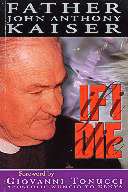 August 25, 2006
Published in the Daily Nation
Father John Kaiser is this year's recipient of the Milele (Lifetime Achievement) Award.
The posthumous award will be presented by the Kenya Human Rights Commission during the Catholic priest's memorial ceremony tomorrow.
According to the commission, the award was in recognition of Fr Kaiser's dedication to the pursuit of human rights and justice for Kenyans.
A statement from the Catholic Church said during his 36 years in Kenya, Fr Kaiser advocated against land grabbing and corruption.
"An outspoken critic of the Moi regime, he worked tirelessly for the rights of the poor and marginalised in society," said the Catholic Justice and Peace Commission.
The cleric was killed six years ago in mysterious circumstances at Morendat junction on the Nakuru-Naivasha road.
After his death, the Government set up an inquest into his murder in 2004 but it is yet to submit its findings.
There will be a procession in Ngong Town to mark the event before Mass to be presided over by Nakuru Catholic bishop Peter Kairo at Mary Mother of God Embulbul Church on Saturday.
Bishop Cornelius Schilder of Ngong Diocese and Fr Kaiser's predecessor, retired Bishop Colin Davis, are also expected to attend the Mass.
Tuesday, August 22, 2006
Church to hold memorial for slain missionary
From the Catholic Information Service for Africa
August 22, 2006
August 22, 2006
The Catholic Church has organized a memorial mass for American-born missionary priest Fr John Anthony Kaiser who died in unclear circumstances six years ago.
The mass will be held on Saturday beginning 10.30 am at Mary Mother of God Embulbul Catholic Church, Ngong near Nairobi. There will be a procession from St Joseph Cathedral starting 8.30 am.
The theme of the memorial is: 'Promote and uphold human rights and dignity.'
A judicial inquest into the death of the Mill Hill missionary on August 24, 2000, is going on in Nairobi. The inquest adjourned to August 28 and will continue through September.
The Kenya National Human Rights Commission conferred the 2006 Milele (Lifetime Achievement) award on Fr Kaiser "for dedicating his life to the pursuit of human rights and justice for the Kenyan people."
Tuesday, April 25, 2006
Man offered cash to kill Fr. Kaiser
Story by NATION Reporter
Publication Date: 04/26/2006
Publication Date: 04/26/2006
A church official had allegedly been hired in 1999 to kill Catholic priest John Anthony Kaiser, a court heard.
But Mr Francis Kantai, of the Catholic Justice and Peace commission, revealed the alleged plot to the priest and informed him that he was to be given Sh100,000 to poison him.
A witness, Mr Stephen ole Naiguta, told the court in Nairobi yesterday that Fr Kaiser informed him of the murder plot after he heard about it from Mr Kantai.
Mr Naiguta said the priest wanted to know whether Mr Kantai could be trusted or whether he could carry on with the plan if he was given the money.
Big Fish
Fr Kaiser claimed that a "Big Fish" was after his life but he did not give any names, the witness told senior principal magistrate Maureen Odero.
The body of the Mill Hill missionary, who headed the Lolgorian parish of Ngong diocese, was found at the Morendat junction, on the Nakuru-Naivasha road, on August 24, 2000.
A team from the US Federal Bureau of Investigations, which joined their Kenyan counterparts on August 25, concluded that Fr Kaiser committed suicide. But church leaders and human rights lobbyists rejected the report, and demanded an inquest.
Yesterday Mr Naiguta, who is also a JPC official in Trans Mara District, told the court that the priest had insisted that his life was in danger. The hearing continues.
Saturday, March 04, 2006
Letter to the Editor
Letter to the Editor
St. Cloud Times
March 4, 2006
Thanks for the Feb. 27 report on the Rev. John Kaiser. He certainly is a hero who we need to learn from. ...
We live with so much corruption in our world today. Kaiser took it on with courage.
The Kenyan government honors him. It is wonderful to see that a foreign government and its citizenry today, like Kenya, would honor one of our citizens. Kaiser's niece, Mary Weaver, put it very well: "We know that he was a wonderful man. But to see the People of Kenya know this and mourn his passing, it was a powerful experience for my parents."
If the people of Kenya could see his great virtue, and remember him, I am sure we can, too.
Anthony Kroll, Holdingford
Wednesday, March 01, 2006
Kaiser honored by Kenyan government
Published March 1, 2006
Fergus Falls Daily Journal
An Underwood native was given a lifetime achievement award by a Kenyan rights group for his work in the African country - work that, ironically, may have led to his death at the hands of the Kenyan government.
Father John Anthony Kaiser, a member of the St. Cloud Diocese who spent 36 years as a missionary to Kenya, was found dead in August 2004 from a shotgun wound.
The FBI and the Kenyan Criminal Investigation Division ruled Kaiser's death a suicide, but his family has long believed that he was murdered for speaking out against what he believed was then a corrupt and cruel Kenyan government.
During his time in Kenya, Kaiser was instrumental in helping to build schools, churches, hospitals and orphanages. But, his niece, Mary Weaver of Fergus Falls, said Kaiser also spoke out against the Kenya government's ethnic cleansing by forcing its citizens into concentration camps during a period of land grabs.
“He had death threats, was beaten and left out in the bush, was threatened with deportation,” said Weaver, who lives near where Kaiser grew up. “Three weeks after he died, he was supposed to testify before the Hague, the world criminal court, about the government.”
“Father Kaiser stood firm in the face of intimidation and death threats,” they wrote in their posthumous nomination. “He never compromised or changed his position in the face of external pressure, but continued his struggle to protect and promote human rights in Kenya ‘til the end of his days.”
“It's almost like a public apology on behalf of the Kenyan government because of what their predecessors did,” Weaver said.
While an official government inquest into Kaiser's death has been off and on since 2002, Weaver and other members of Kaiser's family are hoping to learn the truth for themselves. Weaver believes the FBI sought to ease relations with the Kenyan government and purposefully hid information from their forensic pathologist who studied the case.
Kaiser's death was featured on numerous national news shows, including 60 Minutes. His case was also taken by the late Sen. Paul Wellstone.
Progress in her family's investigation has been slow, Weaver said, however, she may have found an independent pathologist to study Kaiser's death.
“All we want is an independent investigation,” she said. “If they come back with the same conclusions, so be it.”
Kaiser receives Kenyan honor
By Frank Lee
Published February 27. 2006
St. Cloud Times
The Rev. John Kaiser recently received Kenya's highest human rights honor from the very same government he fought against — and some say died at the hands of.
"It's ironic that he did receive this award from a government-sanctioned body," said his niece, Mary Weaver of Fergus Falls.
Kaiser, a member of the Diocese of St. Cloud, was found dead five years ago along a busy highway between Naivasha and Nairobi with a gunshot wound to the head.
The 67-year-old's death was ruled a suicide by the FBI and the Kenyan Criminal Investigation Division, but there is an ongoing judicial inquiry in Nairobi into his death.
The Perham native was an outspoken critic of the ethnic cleansing and distribution of land in the East African country under the regime of former President Daniel arap Moi.
"Many people told John to cool it. He knew that his life was in jeopardy," said the Rev. William Vos, former director of the St. Cloud Mission Office of the Diocese of St. Cloud.
-Humanitarian-
Kaiser shares the Milele (Lifetime) Achievement Award with professor Wangari Maathai of Kenya, an environmentalist, activist and winner of the 2004 Nobel Peace Prize.
"John was a very strong person in every way — a paratrooper, a good college athlete — and also ethically," said Vos, a St. John's University classmate of Kaiser's.
The Kenya National Commission on Human Rights handed out the award at a Feb. 18 ceremony attended by Bishop Cornelius Schilder of the Diocese of Ngong, where Kaiser worked.
"John just had a real clear view on what's right, and that's what ultimately led to his conflict with the Kenyan government," Vos said of Kaiser's work, which spanned three decades.
Kaiser was helping teen-age girls who accused a Kenyan Cabinet member of sexual assault, but Kaiser died within a week of the scheduled court hearings.
The FBI's report in 2001 referred several times to circumstantial evidence indicating Kaiser, a member of the Mill Hill Missionaries, had suffered from manic depression.
But in a book that was published after his death, Kaiser had written "I am not planning any accident, nor, God forbid, any self-destruction."
"The whole investigation into his death was botched," said Vos, who attended Kaiser's funeral amid thousands of mourners.
The theory that Kaiser, a Roman Catholic priest, would have committed suicide is incomprehensible to Weaver and many others.
"No way — not in my opinion — based on his faith, in which suicide is a big no-no," Weaver said.
-Life and death-
The Diocese of St. Cloud has a relationship today with the Diocese of Homa Bay in Kenya.
"One of the things that is very important to my family is that there's still an inquest happening in Kenya into my uncle's death," Weaver said.
"We've struggled to find a pathologist to do an independent review of the forensic evidence because it means going against the FBI's hired expert."
The 42-year-old is a staff writer for the Dairy Star, a semimonthly newspaper in Sauk Centre, and assistant editor of Lake and Home Magazine, a bimonthly in Fergus Falls.
"We're methodically going through every piece of evidence, and sometimes that's not always available to the attorneys representing our family without a fight," Weaver said.
Weaver would see her uncle for a couple of months whenever he returned to the United States to raise funds for various projects.
The CBS News program "60 Minutes" examined the death of the Minnesotan and featured an interview with the late U.S. Sen. Paul Wellstone in May 2001.
"My uncle often played the devil's advocate just to get a rise out of somebody, but was extremely giving, passionate about everything — what he was reading, religion, what he was doing, politics," Weaver said.
Kaiser's work with the International Federation of Women Lawyers-Kenya during the investigation of the rape of Kenyan teens was cited when he received the Milele award.
"We know that he was wonderful man. But to see the people of Kenya know this and mourn his passing, it was a powerful experience for my parents," Weaver said.
About Kenya:
The International Monetary Fund, which had resumed loans in 2000 to help Kenya through a drought, again halted lending in 2001 when the government failed to institute several anticorruption measures.
Daniel arap Moi’s 24-year-old reign ended with the Dec. 27, 2002, elections, and a new opposition government took on the formidable economic problems facing the nation.
» Location: Eastern Africa, bordering the Indian Ocean, between Somalia and Tanzania.
» Size: Slightly more than twice the size of Nevada.
» Capital: Nairobi.
» Population: 33.83 million (2005 estimate).
» Life expectancy: 48 years (2005 estimate).
» Death rate: 14.65 deaths/1,000 population (2005 estimate).
» Religions: Protestant, Roman Catholic, Muslim, other.
Source: CIA World Factbook.
Published February 27. 2006
St. Cloud Times
The Rev. John Kaiser recently received Kenya's highest human rights honor from the very same government he fought against — and some say died at the hands of.
"It's ironic that he did receive this award from a government-sanctioned body," said his niece, Mary Weaver of Fergus Falls.
Kaiser, a member of the Diocese of St. Cloud, was found dead five years ago along a busy highway between Naivasha and Nairobi with a gunshot wound to the head.
The 67-year-old's death was ruled a suicide by the FBI and the Kenyan Criminal Investigation Division, but there is an ongoing judicial inquiry in Nairobi into his death.
The Perham native was an outspoken critic of the ethnic cleansing and distribution of land in the East African country under the regime of former President Daniel arap Moi.
"Many people told John to cool it. He knew that his life was in jeopardy," said the Rev. William Vos, former director of the St. Cloud Mission Office of the Diocese of St. Cloud.
-Humanitarian-
Kaiser shares the Milele (Lifetime) Achievement Award with professor Wangari Maathai of Kenya, an environmentalist, activist and winner of the 2004 Nobel Peace Prize.
"John was a very strong person in every way — a paratrooper, a good college athlete — and also ethically," said Vos, a St. John's University classmate of Kaiser's.
The Kenya National Commission on Human Rights handed out the award at a Feb. 18 ceremony attended by Bishop Cornelius Schilder of the Diocese of Ngong, where Kaiser worked.
"John just had a real clear view on what's right, and that's what ultimately led to his conflict with the Kenyan government," Vos said of Kaiser's work, which spanned three decades.
Kaiser was helping teen-age girls who accused a Kenyan Cabinet member of sexual assault, but Kaiser died within a week of the scheduled court hearings.
The FBI's report in 2001 referred several times to circumstantial evidence indicating Kaiser, a member of the Mill Hill Missionaries, had suffered from manic depression.
But in a book that was published after his death, Kaiser had written "I am not planning any accident, nor, God forbid, any self-destruction."
"The whole investigation into his death was botched," said Vos, who attended Kaiser's funeral amid thousands of mourners.
The theory that Kaiser, a Roman Catholic priest, would have committed suicide is incomprehensible to Weaver and many others.
"No way — not in my opinion — based on his faith, in which suicide is a big no-no," Weaver said.
-Life and death-
The Diocese of St. Cloud has a relationship today with the Diocese of Homa Bay in Kenya.
"One of the things that is very important to my family is that there's still an inquest happening in Kenya into my uncle's death," Weaver said.
"We've struggled to find a pathologist to do an independent review of the forensic evidence because it means going against the FBI's hired expert."
The 42-year-old is a staff writer for the Dairy Star, a semimonthly newspaper in Sauk Centre, and assistant editor of Lake and Home Magazine, a bimonthly in Fergus Falls.
"We're methodically going through every piece of evidence, and sometimes that's not always available to the attorneys representing our family without a fight," Weaver said.
Weaver would see her uncle for a couple of months whenever he returned to the United States to raise funds for various projects.
The CBS News program "60 Minutes" examined the death of the Minnesotan and featured an interview with the late U.S. Sen. Paul Wellstone in May 2001.
"My uncle often played the devil's advocate just to get a rise out of somebody, but was extremely giving, passionate about everything — what he was reading, religion, what he was doing, politics," Weaver said.
Kaiser's work with the International Federation of Women Lawyers-Kenya during the investigation of the rape of Kenyan teens was cited when he received the Milele award.
"We know that he was wonderful man. But to see the people of Kenya know this and mourn his passing, it was a powerful experience for my parents," Weaver said.
About Kenya:
The International Monetary Fund, which had resumed loans in 2000 to help Kenya through a drought, again halted lending in 2001 when the government failed to institute several anticorruption measures.
Daniel arap Moi’s 24-year-old reign ended with the Dec. 27, 2002, elections, and a new opposition government took on the formidable economic problems facing the nation.
» Location: Eastern Africa, bordering the Indian Ocean, between Somalia and Tanzania.
» Size: Slightly more than twice the size of Nevada.
» Capital: Nairobi.
» Population: 33.83 million (2005 estimate).
» Life expectancy: 48 years (2005 estimate).
» Death rate: 14.65 deaths/1,000 population (2005 estimate).
» Religions: Protestant, Roman Catholic, Muslim, other.
Source: CIA World Factbook.
Thursday, February 23, 2006
Making progress
Recently I have been trying different avenues in order to obtain a forensic pathologist to review the evidence in John's murder. No sooner do I think I have someone when they disappear (not literally) off the face of the earth, never returning emails or phone calls. It's been quite frustrating.
But I have an excellent lead which I'm quite excited about. I will not provide more details until I know it's a done deal, though. I write this simply to have prayers said that it will work out in the manner we need and we're able to get an independent review.
But I have an excellent lead which I'm quite excited about. I will not provide more details until I know it's a done deal, though. I write this simply to have prayers said that it will work out in the manner we need and we're able to get an independent review.
Wednesday, February 22, 2006
Human Rights Citation
KENYA NATIONAL COMMISSION ON HUMAN RIGHTS
Citation for 2006 Milele (Lifetime Achievement) Award to Fr. John Anthony Kaiser
The Awards Committee for the Third Annual Human Rights and Democracy Awards confers the Milele (Lifetime Achievement) Award posthumously on Father John Anthony Kaiser for dedicating his life to the pursuit of human rights and justice for the Kenyan people.
During his thirty-six years in Kenya, Father Kaiser challenged the Government on corruption and advocated against land grabbing and excess by local politicians. An outspoken critic of the Moi regime, he worked tirelessly for the rights of the poor and marginalized in society. Father Kaiser devoted himself to working with the internally displaced following ethnic clashes in the Rift Valley in 1992. In 1998 he told a judicial inquiry that two cabinet ministers had trained people to rid the area of opposition supporters. Following these accusations, he was told to leave the country and went into hiding, but due to protests from the Kenyan people and successful lobbying from the U.S Government, the decision to deport him was revoked.
Father Kaiser was a firm supporter of women’s rights in every aspest of his work; he courageously protected and supported two girls who were alleged to have been raped by a cabinet minister. He helped furnish the evidence that the Federation of Women Lawyers in Kenya (FIDA- Kenya) relied on to institute a private prosecution against Julius Sunkuli, previously a minister of State in the Office of the president.
Father Kaiser stood firm in the face of intimidation and death threats. He never compromised or changed his position in the face of external pressure, but continued his struggle to protect and promote human rights in Kenya till the end of his days. We honour his lifetime achievement and hope that the mystery surrounding the death of this committed individual will one day be unraveled.
Citation for 2006 Milele (Lifetime Achievement) Award to Fr. John Anthony Kaiser
The Awards Committee for the Third Annual Human Rights and Democracy Awards confers the Milele (Lifetime Achievement) Award posthumously on Father John Anthony Kaiser for dedicating his life to the pursuit of human rights and justice for the Kenyan people.
During his thirty-six years in Kenya, Father Kaiser challenged the Government on corruption and advocated against land grabbing and excess by local politicians. An outspoken critic of the Moi regime, he worked tirelessly for the rights of the poor and marginalized in society. Father Kaiser devoted himself to working with the internally displaced following ethnic clashes in the Rift Valley in 1992. In 1998 he told a judicial inquiry that two cabinet ministers had trained people to rid the area of opposition supporters. Following these accusations, he was told to leave the country and went into hiding, but due to protests from the Kenyan people and successful lobbying from the U.S Government, the decision to deport him was revoked.
Father Kaiser was a firm supporter of women’s rights in every aspest of his work; he courageously protected and supported two girls who were alleged to have been raped by a cabinet minister. He helped furnish the evidence that the Federation of Women Lawyers in Kenya (FIDA- Kenya) relied on to institute a private prosecution against Julius Sunkuli, previously a minister of State in the Office of the president.
Father Kaiser stood firm in the face of intimidation and death threats. He never compromised or changed his position in the face of external pressure, but continued his struggle to protect and promote human rights in Kenya till the end of his days. We honour his lifetime achievement and hope that the mystery surrounding the death of this committed individual will one day be unraveled.
Tuesday, February 21, 2006
Human Rights Crusader Wins Award
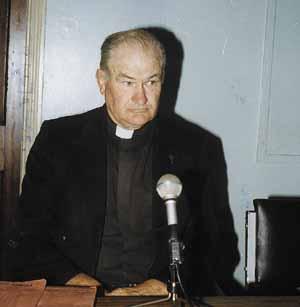 A Catholic missionary priest whose death five years ago still remains a puzzle has been awarded the country's highest human rights honour.
 Fr John Anthony Kaiser shared the Milele (Lifetime) Achievement Award with noted environmentalist and human rights crusader, Prof Wangari Maathai, winner of the 2004 Nobel Prize for Peace.
The award was given by the Kenya National Commission on Human Rights (KNCHR) during a ceremony attended by among other guests, Bishop Cornelius Schilder of Ngong Diocese, where Fr Kaiser worked.
The national human rights group said Fr Kaiser dedicated his life to the pursuit of human rights and social justice for the Kenyan people during his 36 years in the country.
"An outspoken critic of the [former President Daniel] Moi regime, he worked tirelessly for the rights of the poor and marginalized in society. Fr Kaiser devoted himself to working with the internally displaced people following the State-engineered ethnic clashes of 1992."
Fr Kaiser was found dead in mysterious circumstances on August 24, 2000. A judicial inquiry into the death continues in Nairobi.
In 1998, he told a judicial inquiry that two cabinet ministers had trained people to eliminate opposition supporters where he worked. As a result, he was told to leave the country and went into hiding.
"Fr Kaiser was a firm supporter of human rights in every aspect of his work," the Commission said. "He courageously protected and supported two women who are alleged to have been raped by a Cabinet minister, who also happened to be the Minister for Internal Security."
He worked with the federation of Women Lawyers (Fida-Kenya), which sued Julius Sunkuli, then a Cabinet Minister, in connection with the allegations.
He stood firm in the face of intimidation. He never compromised or changed his position in the face of great pressure, but continued the struggle to protect and promote human rights till the end of his life.
"We honour his lifetime achievement and hope that the issues surrounding the death of this committed individual will one day be unravelled," the Commission said.
Monday, February 20, 2006
Court looking into priest's death to visit church house
| Court looking into priest's death to visit church house Story by NATION Reporter Publication Date: 2/21/2006 | ||||
| ||||
Wednesday, February 15, 2006
Moi was involved
| Priest tells Kaiser probe of Moi link in evictions Story by MARK AGUTU Publication Date: 02/16/2006 | ||
| ||
Tuesday, February 07, 2006
Kaiser was murdered
| 'Brother': Kaiser was murdered Story by NATION Correspondent Publication Date: 2/7/2006 | ||||
| ||||
Wednesday, January 25, 2006
I didn't seize women, probe told
| I didn't seize women, police chief tells Kaiser probe Story by NATION Reporter Publication Date: 01/25/2006 | ||||
| ||||
CID talks
I can account for my trip, CID man tells Kaiser probe
Story by MARK AGUTU
Publication Date: 01/26/2006
A senior CID officer yesterday pledged to account for his movements weeks before Catholic priest John Kaiser was found dead.
Assistant commissioner of police Francis Njiru said he would table before an inquest into the priest's death details about his travel to Rift Valley Province. The priest was found dead near Naivasha Town.
Answering questions from State counsel James Mungai and later Catholic Church lawyer Mbuthi Gathenji, the officer denied any involvement in the death of Fr Kaiser.
"That is a total lie," he said in response to a question by Mr Mungai, who informed him that a witness had linked him to the murder.
He told Nairobi magistrate Maureen Odero: "I didn't, repeat, didn't kill him. I never knew him until his death was reported in the daily newspapers."
He promised to bring work tickets and imprest forms to show exactly when a crack unit he had led to Rumuruti in Laikipia reported back to their base in Nairobi in early August.
His team of between eight and 10 officers had travelled to Rumuruti on the instructions of CID boss Francis Sang to combat carjackers in the area.
And after the operation, in which a few people were arrested, the team passed through Nakuru Town where they reported to the provincial police headquarters before returning to Nairobi.
But asked whether he had records showing when the team came back, Mr Njiru said he could produce work tickets and imprests which bear details of payments to confirm the day of return.
The priest was found dead near the Morendat junction on the Naivasha-Nakuru road on the morning of August 24, 2000, with is head blown off and a shotgun lying nearby.
The hearing continues tomorrow afternoon.
Story by MARK AGUTU
Publication Date: 01/26/2006
A senior CID officer yesterday pledged to account for his movements weeks before Catholic priest John Kaiser was found dead.
Assistant commissioner of police Francis Njiru said he would table before an inquest into the priest's death details about his travel to Rift Valley Province. The priest was found dead near Naivasha Town.
Answering questions from State counsel James Mungai and later Catholic Church lawyer Mbuthi Gathenji, the officer denied any involvement in the death of Fr Kaiser.
"That is a total lie," he said in response to a question by Mr Mungai, who informed him that a witness had linked him to the murder.
He told Nairobi magistrate Maureen Odero: "I didn't, repeat, didn't kill him. I never knew him until his death was reported in the daily newspapers."
He promised to bring work tickets and imprest forms to show exactly when a crack unit he had led to Rumuruti in Laikipia reported back to their base in Nairobi in early August.
His team of between eight and 10 officers had travelled to Rumuruti on the instructions of CID boss Francis Sang to combat carjackers in the area.
And after the operation, in which a few people were arrested, the team passed through Nakuru Town where they reported to the provincial police headquarters before returning to Nairobi.
But asked whether he had records showing when the team came back, Mr Njiru said he could produce work tickets and imprests which bear details of payments to confirm the day of return.
The priest was found dead near the Morendat junction on the Naivasha-Nakuru road on the morning of August 24, 2000, with is head blown off and a shotgun lying nearby.
The hearing continues tomorrow afternoon.
Tuesday, January 24, 2006
Police chief speaks
| I didn't seize women, police chief tells Kaiser probe Story by NATION Reporter Publication Date: 01/25/2006 | ||
| ||
Subscribe to:
Posts (Atom)


